Researchers say robots in the future must show not only the capacity to take orders
At the core of the research is swarm technology; the study of how large groups
From
the organizational strength of the ant colony, to the unseen
communication in a swarm of butterflies, nature has always beaten man to
it.
But now researchers at
Festo, a German industrial control and automation company, are taking
their cue from the natural world to gain valuable insights that could
one day transform industry.
Its three
latest projects -- BionicANTs, eMotionButterflies and its tongue-like
FlexShapeGripper -- all mimic nature to find solutions to the problems
thrown up by the coordination and logistics necessary to carry out
mechanical robotic tasks.
"With all of
our products we want to show how innovative technical ideas can
facilitate the future of work and how principles from nature can change
and improve industries," a Festo spokesman told CNN.
The
aim of its butterfly project, for instance, shows how communication in
flight could one day work for complex networks in the workspace.
"We
wanted to show how several objects could be coordinated without
colliding in a three- dimensional space thanks to a multifaceted
network," he said.
"Although
we don't expect our butterflies to be flying through factories any time
soon, their integrated network systems may well be used as solutions
for industrial logistics applications or could lead to a guidance and
monitoring system in future factories."
Swarm tech takeover
Its
prototype artificial BionicANTs, meanwhile, takes its cue from the
deeply hierarchical and highly organized world of the ant colony."
Our
ants are able to communicate with a network on their own. Working
together they can achieve things they could not do by themselves," he
said.
"This cooperative behavior
provides interesting approaches for the factory of tomorrow."With
greater flexibility and individuality demanded of automation in the
future, the ants, he said, show how a networked group can communicate
with each other while at the same time take orders at a higher control
level.
"Using these types of networks will allow industries to better cater to the individual requests of customers."
At
the core of the research is swarm technology; the study of how large
groups such as bees, ants and butterflies can act in concert as a group
but at the same time maintain enough individual volition to avoid
collision.
"Swarm technology has improved in a huge way in recent years," said.
"Our
butterflies get their instructions from a master computer in much the
same way as an air traffic controller operates at an airport,
coordinating all the different flying maneuvers each butterfly performs.
"This
automated controller checks the position of all the butterflies and
makes sure there will be no collision. A human pilot is not required."
The ants, on the hand, communicate with each other and come to an agreement about what to do next.
"Even
though the ants are part of an overall networked system, every ant is
an individual unit which can react independently to a situation," he
said. "Swarm technology has a huge significance for the future of
mechanization and is improving very fast."
Learning from lizards
The
chameleon-tongue robot -- a liquid-filled rubber gripping device which
mimics the grasping abilities of the predatory lizard -- could be used
to handle small objects, replacing the finesse of human motor abilities
in the workplace.
"The tongue has the
ability to grab differently-shaped objects and it can also grab more
than one thing at once," he said. "It could be used, for instance, in
lightening the load of small but time-consuming jobs on the factory
floor or even to clean up a room by taking things back to their usual
places."
He said the importance of
these prototypes shows the direction of industrial automation -- that
robots must not only take their orders from a central computer but show
the capacity for individual action as well.
"The
components have to be able to manage their own actions while knowing
what the other members of their network are doing," he said.
"Bionic
products are leading to new ideas about how industrial processes could
work. At the moment the development is furious and the changes are
fundamental.
"Who knows what the status quo will be in 10,15 or 20 years time."
(CNN)Could the next moon mission involve a small step for an ape, but a giant leap for all robots?
With
renewed interest in moon exploration -- in particular the remote
possibility that deposits of helium-3, believed to be in greater
concentration on the moon, could one day power nuclear fusion power
plants on Earth -- robots might be the ideal solution, especially to
keep the costs down.
And a design from
the German Research Center for Artificial Intelligence (also known as
DFKI) in Bremen, Germany, has landed on the chimpanzee as its model for
unmanned lunar missions.
Quadruped stability
DFKI hopes its design -- called the iStruct Demonstrator and
nicknamed "Charlie"- will capitalize on the inherent stability of the
ape's quadrupedal stance without losing the chimp's versatility in
climbing, grasping and moving over all types of terrain.
"We chose the ape because it allows us to study several locomotion modes," DFKI researcher Daniel Kuhn told CNN.
"For
example, they have quite good quadrupedal walking abilities but they
can also perform stand- up motion and walk on two legs -- their ability
to do this is greater than other animals. This change in posture and
walking form interested us," he said.
Four-legged
locomotion, Kuhn explained, might be stable -- but for speed and
agility on flat ground, bipedal walking has the edge.
The chimp's greatest asset is that it can choose which form of movement best fits the situation.
"They
can choose: if the environment won't let you move in a stable fashion
on two legs they can choose four. When the environment improves, two
legs allows you to get a better view over the field."
Founded by the German space agency DLR, the project has also built Lunar craters in a lab to test the prototype.
"In general, we are very happy with the results," he said. "The robot can walk up and down slopes of up to 20 degrees.
"Currently,
we are studying how to transfer from the four-legged to the two-legged
motion pattern, which is very interesting. This system gives us hints as
to how much deviation there is between the four-legged and the
two-legged walking and how humans evolved to walk on two legs."
Lower body torque
Previously,
most multi-legged robots have been equipped with single-point contact
feet for the sake of simplicity in design and control.
However
the robotic chimpanzee focuses on a sophisticated lomwer limb system
that combines the torque and twist of the chimpanzee's lower body.
And, like a real chimp, the robot's feet and hands have multiple sensors and multiple points of contact.
The
sensors include a pressure sensor array of 43 individual force sensing
resistor (FSR) sensors. It also has six additional FSR-sensors used for
collision detection.
The robot is also
equipped with a distance sensor in the heel to anticipate the heel
strike and two temperature sensors to compensate for the difference in
temperature produced by its own electronics.
Robot with backbone
Its biggest advantage, however, comes from the fact that like a real chimpanzees, it has a spine.
"We
have an actuated spine -- one of the first ever built -- and for us it
was very interesting how the spine influences the motion of the legs,"
Kuhn said. "We need much less activation for the knee -- the knee can be
much lower if we use the spine and it needs less force to move the
robot.
"It's strong enough to walk around and carry its own weight -- and it can carry 20 to 25 kg of additional weight."
Because of the embedded electronics in the
spine, the overall structure can be used as a 6-axis force-torque
sensor, allowing it a range of movement that replicates human and animal
mobility.
Daunting specs
For those designing lunar robots, the list of specifications can be daunting.
Not
only must a robot be able to see, drill, grind, collect and even sieve,
it needs to get around a hostile environment in extreme temperatures
and in a vacuum.
Robots also must offer
the greatest strength and versatility for the least payload and have
the ability to fix problems if something goes wrong.
With
the moon 380,000 kilometers away, there's little margin for error and
Kuhn says it may take three or four generations before the lunar chimp
is completely space proof.
"You have
to use different technologies - you can't use the same electronics that
you use on Earth; they have to be space qualified and space proof.
"What
we are doing is working on integrating more redundancy into the robot.
If something goes wrong then we can rely on different actuators."
Space and other animals
The
chimpanzee is not the only animal that is being studied by DFKI as a
potential model for a lunar robot. Also on the drawing board are plans
for a lunar mantis and a lunar scorpion.
Also at the prototype stage, the advantage of this type of locomotion, Kuhn says, has great potential.
"What
you have is an animal that can stand on four legs, giving it stability,
but can use its front two legs to manipulate objects," he said.
Engineers David Christensen, left, and Elliot Hawkes, right, with their tiny robots.
Imagine dragging a blue whale around on land without batting an eye.
That's similar to the strength of tiny robots being developed by
engineers at Stanford University.
These micro-robots, which are
about the size of a Matchbox car, can pull 2,000 times their weight.
They come in two sizes, and the smaller one can even haul items up glass
walls.
"These are the first micro-robots that are able to live in -- and
manipulate -- a human-sized world," said David Christensen, who
developed the robots with fellow Ph.D student Elliot Hawkes.
So
far, the robots have just been used in the lab to haul around weights,
drag a full coffee cup across the table and move objects up a wall, but
their strength does have some applications for the real world.
The engineers said the robots could be equipped with CO2 sensors and
then sent into a burning building to find survivors. Or, in less dire
circumstances, they could be used to put objects in out-of-reach spots
-- like a wireless router in the rafters of a factory.
Christensen said the robots should be thought of as a little army that
can be deployed, and since they're cheap to make -- each one only costs
about $20 -- it's not a big deal if one goes missing.
"You can
make hundreds of them and you don't care so much about breaking one or
losing one because they become disposable," said Hawkes. He and
Christensen can build a new robot in just a day or two in the lab. They
use 3D printers to make the parts, which has sped up the process.
This robot, officially called the Ground MicroTug, weighs 12 grams but can pull 2,000 times that amount.
When designing the robots' movement, the engineers were inspired by
geckos and ants, whose feet adapt when they climb or carry a load.
To haul an object, the robot first drives forward on its two front
wheels, and then plants itself on a hard surface and pulls on a string
attached to the object. It continuously repeats the process to move
things forward, and can keep goingas long as there isn't anything in its way. The robots' "feet" have spikes that stick to the ground, much like a gecko.
The robots are still a work in progress and have only been in
development for a few months. They will be on display next month at the
International Conference on Robotics and Automation in Seattle, Wash.
"What we're trying to prove is that we can do amazing things like ants can do," Christensen said.
It's hoped that the tiny robots will one day work just like ant
colonies, which work together as a team to get things done. Ants are
especially impressive when it comes to weightlifting -- a regular ant
can lift up to 5,000 times its own body weight.
"If I have an ant crawl on my hand, you realize how awesome they are," Hawkes said. "They are beautiful little things."
Tokyo (CNN)A
crowd gathers near the entrance of Tokyo's upscale Mitsukoshi
Department Store, which traces its roots to a kimono shop in the late
17th century.
Fitting with the
store's history, the new greeter wears a traditional Japanese kimono
while delivering information to the growing crowd, whose expressions
vary from amusement to bewilderment.
It's hard to imagine the store's founders in the late 1600's could have imagined this kind of employee.
That's because the greeter is not a human -- it's a robot.
Aiko
Chihira is an android manufactured by Toshiba, designed to look and
move like a real person. It was put on temporary display at the
department store.
Toshiba says Chihira has 43 motors allowing it to move, speak in sign language and even sing.
The
regular greeter, Ayako Seiryu, says she's not worried about a robot
replacing her -- even one made to resemble a real 32-year-old woman.
"Communication is important," she says. "My strength is I can actually talk to people."
Chihira
can't have a conversation yet, acknowledges Hitoshi Tokuda, Toshiba
spokesperson. But he says the technology is evolving quickly and
someday, robots like Chihira could replace humans for certain jobs.
Robots in the workforce?
A growing number of Japanese businesses are testing out robots as a possible solution to the country's shrinking workforce.
They're appearing in stores, banks and soon even hotels.
Bank
of Tokyo-Mitsubishi UFJ is trying out "Nao," a customer service robot
that answers basic questions and is designed to speak 19 languages. The
robotic polygot could prove useful serving foreign customers during the
2020 Tokyo Olympics.
By then, the bank hopes to have even more robots on staff.
"Pepper" is a humanoid robot that "chats" with customers. A humanoid
has human-like characteristics such as arms, legs and a head -- but is
designed to look like a robot. Pepper first began appearing in Tokyo
stores last year.
Manufacturer Softbank hopes it'll eventually be a "family robot," like a sleeker version of Rosie on "The Jetsons."
A hotel scheduled to open at Huis Ten
Bosch theme park in Nagasaki this summer plans to have 10 robot staff
members and aims to increase that to more than 90% of hotel services
operated by robots.
Today's novelty
could be tomorrow's necessity. Japan has an aging population that has
prompted serious talks about how to incorporate robots into the nation's
shrinking workforce.
One group that seems willing to embrace robots are Japan's senior citizens.
A
survey by nursing home operator Orix Living found more seniors would
feel comfortable being cared for by a robot than a foreign nurse.
In
a nation with a dwindling population, waning workforce, and deep
resistance to immigration, it seems robots will only play a larger role
in Japan's future.
Sunday, May 3, 2015
CES 2015: 25 new products and technologies worth talking about
From battery-swapping scooters and people-sensing drones to action cams, virtual reality headsets and smart beds for kids
In many ways, this year’s CES
technology show in Las Vegas is business as usual. Devices are getting
thinner, a new acronym is spawned every minute, and every company is
revolutionising something in their press releases.
What are the products whose implications will last longer than the
in-show hype, though? Below, we’ve rounded up 25 of the new products and
technologies from CES 2015
that are worth talking about. Which, note, isn’t the same thing as
calling them the “best” products or the ones most likely to be
commercially successful.
Take a read, then have your say in the comments section on some of the issues raised by these products.
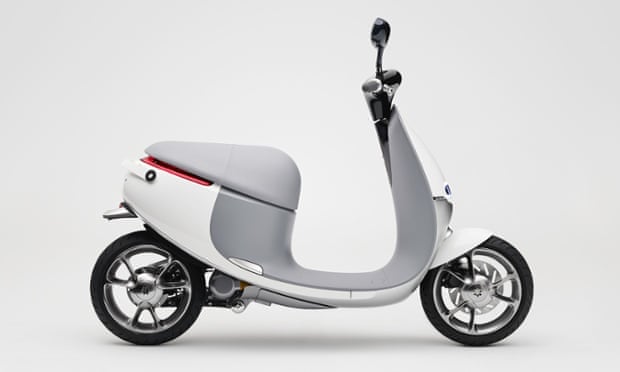
Gogoro Smartscooter
Gogoro’s Smartscooter
is an electric scooter with a range of nearly 100 miles, but you don’t
recharge its battery: you swap it. The company will operate a series of
hubs where batteries can be reserved ahead of time, then swapped for the
one that’s running out. There’s no news on its launch date or likely
price, including the cost of the ongoing subscription for the batteries. Talking point: better or worse than the Tesla model of charging points?
Voxel8 3D printer
There are plenty of 3D printer companies showing off their new devices at CES, but the Voxel8
is the most intriguing of the lot. Its focus is on printing electronic
circuits rather than just plastic objects, using conductive ink that
dries quickly, and can be embedded in other objects. In the future, it
could be used from devices including hearing aids, wearable gadgets and
even quadcopter drones. Talking point: What does it mean for tech if we can print our own circuits?
Nvidia Tegra X1
Nvidia’s latest chip
isn’t a chip – at least not according to the company, which is pitching
it as a “superchip” thanks to its 256 processor cores and eight CPU
cores. Introduced at CES amid some grand claims – “more power than a
supercomputer the size of a suburban family home from 15 years ago” –
it’ll be making its way into products in due course – including cars,
via Nvidia’s Drive CX cockpit computer, which sports two of ‘em. Talking point: is “mobile computing” a separate category any more, processor-wise?
Sharp Aquos Beyond 4K Ultra HDTV
If you’ve been playing oneupmanship with friends on the quality of
your television, Sharp just unlocked a new level: 8K. Well, not strictly
8K – hence the “beyond 4K” in the title of its new TV,
which uses pixel-splitting technology to deliver an effective
resolution of 7,680 x 4,320. Or, as the company is pitching it: “virtual
8K”. It’ll also be one of the flagship models for Google’s new Android
TV platform. Talking point: that’s a nice 8K telly, but who’s making 8K shows and films?
SkySpecs Guardian drone
Remember that hovering drone in TGI Friday that spoilt Christmas for one diner by flying into her nose? It turns out some drone companies are thinking hard about getting drones to avoid humans. SkySpecs showed its Guardian drone
at the TechCrunch Hardware Battlefield contest during CES, with its
ability to sense humans walking towards its whirring blades, and take
evasive action. Talking point: how would this work in a crowded area: for example a restaurant?
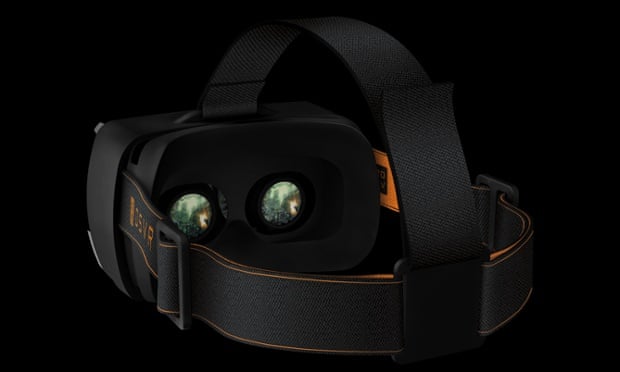
Razer OSVR Hacker Dev Kit
Known for its PC and gaming accessories, Razer is also hoping to give
Facebook’s Oculus Rift virtual reality headset some competition. Its OSVR headset
isn’t a commercial product, as such: the $199 device is more a
development platform to help people experiment with VR apps and games,
with partners including Unity, Sixense and Leap Motion. Talking point: can this stop Oculus dominating developers’ thoughts for VR?
Siemens smart hearing aids
In terms of technology that actually has an impact on people’s daily
lives, drones and VR headsets come a long way behind hearing aids.
That’s why Siemens’ latest products
in that category deserve a wider airing: the “smart” part is their
promised ability to adapt to different conditions, as well as their
integration with iOS and Android apps for other features. Talking point: hearing aids – will people want apps for that?
Sony FDR-X100V action camera
GoPro doesn’t have the “action camera” market all to itself:
traditional tech firms like Sony are just as keen to be helping bikers,
skiiers and other explorers – drones included – record their feats. Its new $500 camera’s key selling point is its ability to record at 4K resolution, as well as the promise of wind-noise reduction. Talking point: can Sony dislodge GoPro as the helmet/drone-cam of choice?
HP Zvr 3D display
There are plenty of concept products floating around CES 2015, as in
previous years. HP’s Zvr display will be going on sale, though, with a
pair of glasses and a connected stylus that enable users to see and manipulate objects in 3D. Including, in the CES demo given to The Verge, a beating heart. For educational potential alone, this is well worth watching. Talking point: when will this tech be affordable enough to be more than a novelty?
Intel Curie
Intel wants to be big in wearables: 2014’s acquisition of fitness-tracker firm Basis Science and its $25m investment in smart eyewear maker Vuzix show that. Curie
is the latest sign of its ambitions: a button-sized device including
Intel’s system-on-a-chip for wearable devices. The idea is that
manufacturers will use Curie to give them a head start when making
wearables, including preserving battery life. Talking point: fitness-trackers, yes, but what else will Curie power?
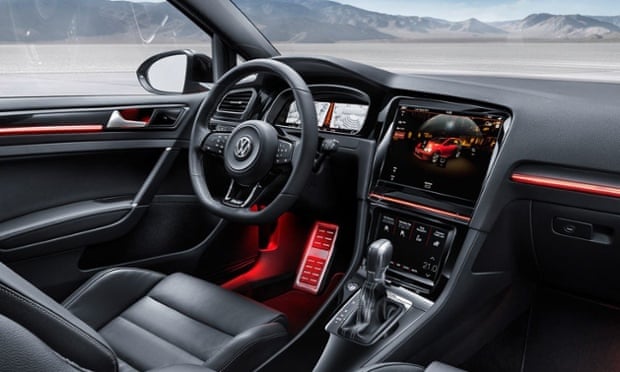
Volkswagen Golf R Touch Concept
The fact that Minority Report gets wheeled out so often as a
comparison for whizzy gestural user interfaces suggests we need more
filmmakers to dream up future tech. Without Tom Cruise in sight, the
controls for Volkswagen’s new concept car’s
dashboard are interesting: tracking hand movements via a 3D camera to
trigger volume, lighting and other features without you actually
touching the dashboard. Talking point: is this more distracting than reaching out for a knob or button?
MakerBot’s new 3D printing materials
MakerBot didn’t launch any new 3D printers at CES, focusing instead
on announcing some new materials for its customers to print with. Its new filaments
use composites of limestone, iron and wood to provide a greater range
of looks and textures for items printed. Good for anyone making
prototypes of objects that don’t lend themselves to a plastic finish. Talking point: a bigger leap forward for 3D printing than any single new printer?
Snapdragon Cargo
Qualcomm is another big company that wants to take a pivotal role in new technologies: drones, in this case. Snapdragon Cargo
is a “flying and rolling robot with an integrated flight controller”, a
showcase for its Snapdragon processor in the same way that its
Snapdragon Rover and Micro Rover robots were. Talking point: how soon will Cargo’s tech be available in affordable consumer drones?
New Mophie Juice Packs
There’s nothing wildly new about Mophie’s new battery packs
for the iPhone 6 and iPhone 6 Plus smartphones, but for many owners of
those devices, they’ll be a big deal: promising up to 120% extra juice
per charge for the 6 and 60% for the 6 Plus. While the latter handset in
particular has a beefier battery than previous iPhones, the balance
between battery life and performance means companies like Mophie have
become an important part of many people’s smartphone lives. Talking point: seriously though, when is the next big leap in battery tech?
HP Stream mini PC
HP thinks there’s legs in teeny-tiny PCs, judging by its two-inch Stream mini,
which will be accompanied by a more expensive Pavilion mini with a
similar shape and size. The company is promising quiet running thanks to
the devices using 45 watts of power, with an emphasis on cloud storage
(with just 32GB of local storage, you’ll likely be needing it). Talking point: would people rather have tiny PCs or decent-sized tablets?
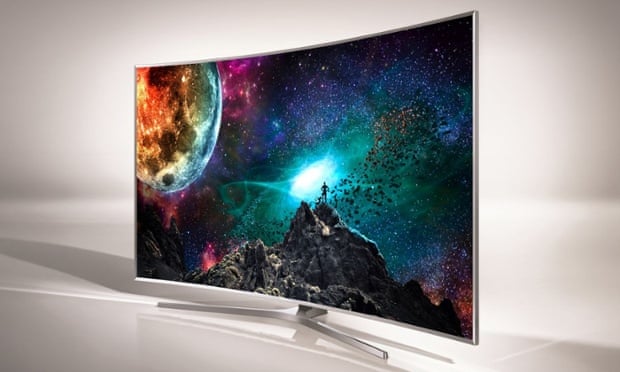
Samsung SUHD TVs
Another year, another acronym in the world of high-end televisions: Samsung’s SUHD sets
are even more super (presumably) than existing UHD (ultra
high-definition) sets that people have been buying since the last CES.
Cue boasts of “eco-friendly nano-crystal technology and intelligent SUHD
re-mastering picture quality engine” from Samsung, and cries of “oh,
they’re curvy” from punters. Talking point: how is the picture really better, in plain English?
Sony SmartEyeglass Attach!
Google Glass is far from a mainstream success, but there are a
smattering of other companies hoping to bring smart eyewear to the
masses. Or at least to a few more people who aren’t rich white men in
Silicon Valley. Sony actually has two products on the go, but its SmartEyeglass Attach! is the most interesting, since it clips on to normal glasses with its miniature screen. Talking point: how small does it need to get before it’s ready for the mainstream?
Panasonic UHD Blu-ray player
Another prototype with an unclear on-sale date, but Panasonic is the first company to break cover with a Blu-ray player capable of pumping out 4K-quality video,
rather than just 1080p content. It’s expected to be one of several
models by the end of this year, although nobody tell Panasonic about
Sharp’s “virtual 8K” plans... Talking point: will you watch 4K films from physical discs or streamed from Netflix?
Withings Activité Pop
This new fitness-tracking watch isn’t just one of the cheapest in its
category – it’ll sell for $150 – but also one of the nicest looking
thanks to its neat, traditional design. The Activité Pop
is a third of the price of its predecessor, the Withings Activité,
counting steps and sleep quality alike. And it promises to run for eight
months at a time from a standard watch battery. Talking point: are watches ultimately going to be the best fitness-tracking devices?
Samsung SSD T1 storage device
That 16GB USB drive you carry around for work? Pfft. Samsung’s latest tiny storage device
is – TECH CLICHÉ ALERT – the size of a business card, yet can hold up
to a terabyte of content in its most expensive version. For anyone who
needs to transfer files quickly between devices, this and similar
devices are likely to be common, with the price coming down relatively
quickly too. Talking point: would this appeal over cloud storage for you?
Toshiba ChihiraAico robot
She looks very realistic. She talks... slightly less so. But
ChihiraAico is a “communication Android” – an early glimpse at the kind
of robots that might be working in “tomorrow’s service industry
and homes”. Translation: you can be as rude as you like about her now,
but when you’re old and ChihiraAico version 4.0 is making your lunch,
you may regret it. Talking point: are robots more or less creepy if they’re humanoid?
Narrative Clip 2
Narrative is one of the prime movers in the “lifelogging” area:
making small camera designed to be worn on your clothes, which snap
regular photographs as you go about your daily business. Its second-generation model
was unveiled at CES: easier to clip on, with a better eight-megapixel
camera and the ability to wirelessly sync photos with the cloud and/or
your smartphone. Talking point: what’s the social cost of having a camera pointing at everyone you meet?
3Doodler 2.0
The first 3Doodler was a pen device which did well on Kickstarter,
then became one of the most accessible ways to explore 3D printing. Now
it’s back, launching a Kickstarter for version 2.0
as it was shown off at CES – it’s already exceeded its $30,000 goal by a
great distance. The update is slimmer, lighter and quieter to use, with
a new nozzle promising “crisper Doodles”. Talking point: what would you doodle, and would the novelty wear off?
Mercedes-Benz F015 Luxury in Motion
Google certainly doesn’t have the self-driving car space to itself these days: Mercedes-Benz revealed its concept car
at CES, complete with Leap Motion gestural controls and seats facing
one another, corporate meeting-style. Also interesting: the slightly
Knight Rider-ish LED displays at the front and back, to communicate with
pedestrians and other drivers. Talking point: even if we’re not driving, is it good to be more unaware of the outside world?
Sleep Number SleepIQ Kids Bed
Not just a smart bed, but a smart bed for children:
this monitors their sleeping patterns, can alert parents if they get
out of bed during the night, can have its lights turned on and off
remotely, and even includes a “monster detector” to ease young minds’
night-time fears. Talking point: should we really be quantifying our children’s selves?
Once again, Samsung has
wowed the crowds at Las Vegas’ Consumer Electronics Show with some truly
ground-breaking technology. Find out what amazing new Samsung products
you can look forward to seeing in 2015 and how possibilities will be
created.
Connecting you with the Internet of Things
What
used to be the stuff of science fiction is now science fact. The
Internet of Things (IoT) has arrived, connecting you not only with your
devices but also with family, friends, colleagues and your lifestyle.
For
Samsung, these always on and always connected smart devices will offer
better solutions and services, totally personalised to you. Naturally,
the connected home will be at the heart of it all. By 2017, all Samsung
TVs will be IoT enabled, as will all our devices be in just five years.
All together better
Of
course, to truly discover the infinite possibilities that the IoT will
bring, requires us to be truly collaborative. That’s why we’re committed
to working openly and closely with our industry partners. The
SmartThings open ecosystem, for example, is compatible with more devices
than any other platform.
Going even further to integrate with
third party devices, Samsung has launched the next generation
SmartThings Hub and service. All of which will transform your home into
the smart home of the future.
True UHD TV has arrived
It wouldn’t be
CES if your TV viewing experience wasn’t taken to the next level. This
year it’s all about SUHD technology like the stunning Samsung 88-inch
SUHD TV JS9500.
As you’d expect, the picture quality is amazing
to look at. The screen delivers stunning contrast, striking brightness
and the spectacular colours you’d usually enjoy at the movies. Talking
of the big screen, Samsung’s SUHD TVs range from 48” display all the way
to a wide-eyed 88”.
Furthermore, to ensure you’ve plenty of
genuine UHD content to enjoy, Samsung has partnered with the UHD
Alliance. From colour quality to sound experience, this union, which
includes industry leaders such as Disney, Dolby and Netflix, is
dedicated to delivering and protecting the true UHD experiences.
Smart TVs get the Tizen edge
All Samsung TVs in 2015 will be re-engineered with the new
and improved Tizen operating system. This open-source platform, based on
web standards, makes the TV experience more intelligent and integrated.
Its enhanced flexibility allows access to more shows and apps as well
as some unique content.
What’s more, Tizen also provides total
entertainment. This includes Samsung’s Milk Music streaming services,
multi player games like Just Dance Now and even access to
PlayStation™Now games, without the need for a console.
The 360° sound experience
The way you
listen to your music today has changed. It makes sense, therefore, to
change the way we deliver it. Thanks to the new Samsung Omni Directional
Experience, new audio products like the WAM 7500/6500, create the
ultimate sound experience. The unique Ring Radiator technology allows
sound to flow in a 360° radius, ensuring that great sound is heard
wherever you are in the home.
Robert King, Vice President,
Consumer Electronics, Samsung UK and Ireland, said “…we understand the
importance of music in the home and these new products will allow our
consumers to enjoy vibrant sound combined with ultimate style and
design.”
Storage that fits in your pocket
As the world leader in advanced memory technology, Samsung is
always looking to improve the way data is stored. The new Portable SSD
T1 is a compact, solid state drive that’s beautifully designed and, at
only 30 grams, easily fits in your pocket. Amazingly, you can store 1TB
of data on it and it offers you unparalleled speed and security. Capable
of transferring data four times quicker than an external HDD and strong
enough to handle bumps and drops, it’s ideal for business travellers,
creative professionals and content creators who work on-the-go.
Home is where the tech is
Samsung knows
you’re more passionate about your home than ever before. Especially when
it comes to the kitchen. That’s why we’ve teamed up with some of the
world’s best Chefs to continue developing the popular Chef Collection – a
whole suite of beautifully designed, professionally inspired culinary
appliances.
As if that wasn’t enough to whet your appetite, the
new PowerBot VR9000 goes even further, with its handy remote control for
intuitive control. All in all making light work of your housework.
See the latest from Las Vegas
To find out
more about Samsung’s latest Digital Appliances and other CES 2015
announcements, take a look at the Samsung CES 2015 press conference and
keynote address.